Diversity and Discourse

The first TED Talk I watched regarding Diversity was “It’s (past) time to appreciate cultural diversity” by Hayley Yeates. Hayley was adopted from South Korea at birth and has lived in Sydney, Australia since she was 5 months old. She begins her speech by using the term “Fasian,” or fake asian. Saying that she never really felt different from everyone else, Hayley explained that she doesn’t wake up in the morning and think about how she can live “her best minority life.” Recounting her experiences in school, Hayley discussed how, in an effort to make her classmates see her as smart and someone they would want to work with despite her race, she pushed herself to answer every question and do every reading. She quickly realized that she was working harder than everyone else “just to be seen,” and began trying to hide her asian characteristics. Later on, Hayley contemplated what it must be like for people actually from asian countries, who didn’t have westernized names and an Australian accent. She goes on to explain the ways in which cultural diversity is “great for business,” with diverse companies producing higher returns than their competitors.

Hayley’s speech taught me all of the ways in which diversity can be good for a workplace. It also taught me the various kinds of diversity that are important to creating an inclusive work environment. The majority of progress regarding workplace diversity focuses on the inclusion of women. But what about cultural minorities? Hayley’s talk prompted me to think about how journalists can employ better tactics to increase diversity within newsrooms and how important it is to do so. She says, “Let’s create environments where we can bring our whole selves to work.” I have to agree with her.

Twitter & Instagram representations of paper topic

My research paper will look at how the age of the #MeToo movement has changed media reporting practices, including content, organizational structure, and language.

Image-53.png

This Instagram post is something I have recently seen quite frequently, and describes the need for the #MeToo movement as well as the type of awareness it brings. The conversation surrounding #MeToo is an important one that leads to survivor-believability and overall education about the issue of sexual assault.

Image-52.png

This post was interesting as it discusses the transformation of the movement in terms of the current climate. The juxtaposition between the motives of #MeToo and how it has been perceived is an important aspect of research into how the movement is reported in the news media. A question I will ask myself when conducting research into this area is if the media reports I examine contribute to either to original goals for the movement, or the “naming and shaming” aspects discussed in this Tweet.

Image-51.png

This is another post demonstrating the necessity of a movement like #MeToo for its ability to raise awareness. The easily shared hashtag allows posts like these to be broadly disseminated and contributes to the progress of the movement to stop sexual assault and victim-blaming. Something I will be looking for while examining news articles are themes of victim-blaming, which often look something like this.

Image-48.png

This Tweet is notable as it depicts the movement as having global implications. This extends the reach of #MeToo and allows the movement to spread awareness beyond its origins in the U.S. It’s also notable as it discusses the issue of how women are portrayed/sexualized, and how that can contribute to rape culture.

Image-50.png

Another example of the global implications of #MeToo can be found in this Tweet, where the movement’s principles have permeated Australian media. This is interesting and pertains to my research as it looks at how media reports can either assist or inhibit the progress of the movement.

Representation of Latinx people on Instagram

Image-42.png

The first post I found regarding representation of Latinx people on Instagram was the interesting observation that children’s toys often do not represent this group. Dolls, such as barbie, specifically, tend to ignore the Latinx population completely, which can have negative effects on the Latina children who may play with them. This could contribute to a sense of non-belonging, unworthiness, or even unattractiveness that could play a role in their adult lives.

Image-43.png

I found several posts describing Latinas as having “attitudes.” This was done both by Latina-run pages and those outside the community. This stereotype can have negative effects as it contributes to the idea that Latinas are overly-emotional or even “crazy.”Image-44.png

This is another post by the same page describing Latina women as having attitudes. The page title, “i.love.latinas” suggests that it is run but a Latinx person, and these posts contribute to the understanding that this stereotype can be positively claimed by members of this group. It is seen as part of the identity of a Latina woman and is not necessarily a negative quality. However, issues arise when this stereotype is perpetuated by members outside of the group, often with the same negative connotations described above.

Image-45.png

This post discusses the push for Latinx people to assimilate, or find an identity differing from the one they ascribe to. This contributes to the idea that Latinx people are often grouped into one homogenous group, stripping individual cultures of their specific characteristics and members of those cultures of their identities.

Image-47.png

Many of the posts I found regarding representation of the Latinx community on Instagram discussed stereotypes of Latinx parents. The most prevalent stereotype is that Latina moms are strict and often act on this in ways that could be considered sassy or feisty. This post demonstrates this, as the mother responds that all she wants for Christmas is her children to behave. It also contributes to the stereotype that Latina women have attitudes.

Boss/Bossy/Bossy Women Memes

For this blog entry, I will be looking at memes related to the search “Boss,” “Bossy,” and “Bossy Women,” respectively. I chose to use google images to find these memes, rather than social media as this engine produces a broad number of images at once and thus provides many options for analysis.

The first thing I noticed when searching “Boss,” was that most memes depicting a boss figure were men. In fact, the only memes with women even in them usually depicted the women, or woman in most cases, as the employee.

Image result for boss memes

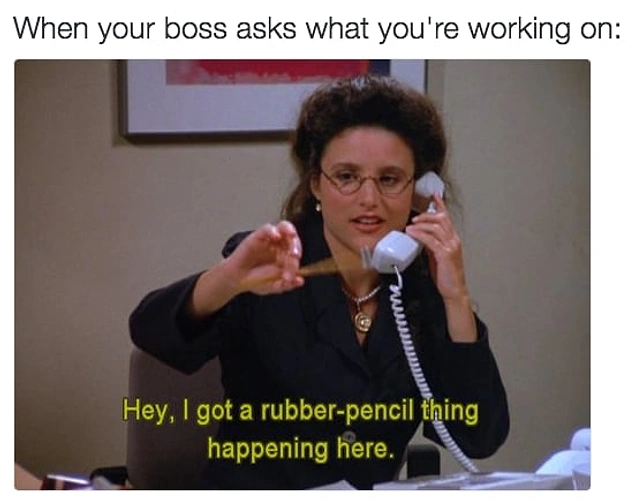
The above post was one of the only memes I could find relating to the word “Boss” with a woman in it. Interestingly, it depicts the woman as lazy, not working, and a potential disappointment to her employer.

29 Workplace Memes That You Probably Shouldn’t CC To Your Boss!

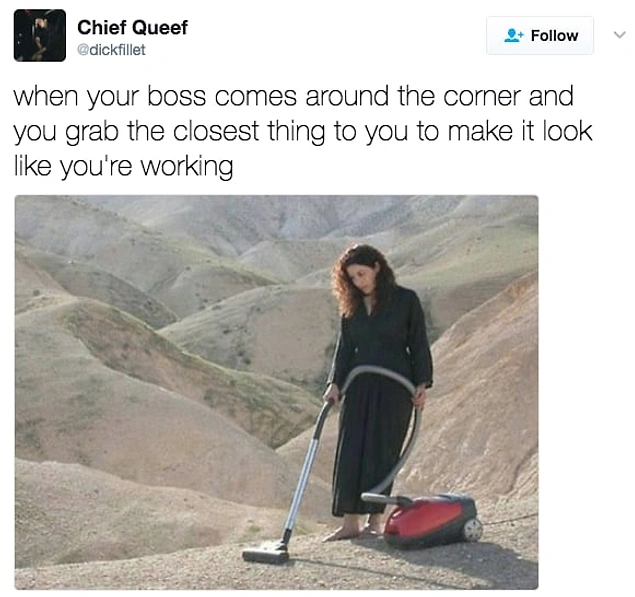
This was another “Boss” meme I found depicting a woman. Again, not a positive portrayal, and even perpetuates the stereotype of cleaning being “woman’s work.”

The search for “Bossy Women” revealed many more posts relating to women, some positive some negative. Although there were still images featuring men, they were often used to disparage women for being “bossy,” like the image below.Image result for bossy memes


The #BanBossy campaign served to end this portrayal of women and it’s association with rudeness, aggressiveness, and being overly-emotional.

However, the “Bossy” search revealed this meme as well, which diminishes the female response to being associated with these stereotypes, and trivializes our feelings towards this.

Image result for bossy memes

Image result for bossy woman memes

When I searched “Bossy Women” memes, I found more negative portrayals of women, however this was one positive portrayal I found. I think the kind of character Hermione represents allows young girls to reclaim the term bossy as one defining leadership and strength. We need more portrayals like this in the media, and in memes as well 🙂


Pinterest representations of Mexicans, Latinos, Hispanics, gender, women, etc.

When searching Pinterest, I was looking for common themes among many of the posts.

When I searched Latina, I found numerous posts discussing the “crazy,” “wild,” “emotional” nature of Latina women. Notably, this was not always discussed as a negative thing, in fact many posters seemed to be Latina women themselves and were celebrating this notion of themselves as a sign of strength and simultaneous sensitivity.

However, many were negative in tone. This post below characterizes many of the Pinterest posts I found relating to the word “Latina.”

file-2.jpeg

It is important to note, however, that not all representations I found on Pinterest involving the emotional nature of a Latina women were negative in tone.

I also found this post, which discusses the strength of Latina women, and is often discussed motivationally on Pinterest posts.

file-3.jpeg

When I searched “Hispanic,” I found many posts relating to a cultural upbringing as a hispanic person. Many of these posts discussed having strict hispanic parents, being close with extended family, and eating delicious food.

This post was a humorous recount of a common theme among many of these Pinterest posts.

file-4.jpeg

The next word I looked up was the word “Mexican.” I actually had to add extra key words in order to pull up search results not involving food or recipes. I then searched “Mexican people” and “Mexican culture” respectively.

One thing expressed in many Pinterest posts relating to this word was the annoyance of being misidentified, or the calling for others to recognize the diversity in the way Mexican people look.

file-5.jpeg

This post shed light on an issue that many Pinterest posts effectively perpetuated: the idea that all Mexican people look a “certain way.” I chose next to focus on the portrayal of Mexican women within my key word search of “Mexican Heritage.”

I found many different illustrations and photographs of Mexican women working, dancing and cooking, however I found that many of the depictions featured similar looking women.

file-6.jpeg

The above post is a variation of what many Mexican women were depicted as, despite the diversity among Mexican women having been established in earlier posts.

This Pinterest analysis was interesting because I did not find many of the patterns I expected to find. My instincts were wrong, as I assumed it would be difficult to find posts about Hispanic culture, Latin women, etc., as Pinterest has not been thought of as the most diverse social media platform. I was pleasantly surprised at the amount of positive reflections in these posts, however, and would be interested in seeing how the portrayal of these cultures progresses on Pinterest.


Women in Social Media

In looking for female stereotypes on social media, I took to Twitter to see what the top tweets regarding these stereotypes were as well as what those I follow are posting about regarding these issues.

The first thing I found was this tweet by Delta Gamma, and I thought it was interesting because of the recent headlines concerning Harvard University, in which sororities were asked by the administration to make their organizations co-ed or face sanctions like rejection of scholarships and being barred from athletic organizations. Women of these and other sororities across the nation protested these mandates by calling our Harvard for diminishing spaces for women.

The interesting thing about this tweet is that sorority women will always be negatively perceived for being involved in their organization, whereas fraternity men often get a pass simply because that’s how fraternities are.

IMG_2222.jpeg

This is a humorous tweet, however it is negative as it opens the door for judgement towards women simply for doing things that people do. This is a slippery slope because when we allow these stereotypes to become part of the mainstream, it becomes hard to distinguish between comedic interpretations of women and harmful ones. IMG_2233.jpeg

This is the same tweeter as the previous post, and has the same implications. What’s even more worrisome is the fact that the previous tweet garnered so much attention, that obviously the poster recreated the effect for humor. The consequences of this though are the perpetuation of the idea that “Nik” and people like him can insinuate that women do trivial things when shopping is something all people do.

IMG_2219.jpeg


The stereotype discussed here is the dangerous one that implies women are overly dramatic and attention seeking. The common idea that women display their emotions without speaking about them has two negative results. First, it implies that women do not have the capacity for communication. And second, it implies that women are crafty and suspicious and act this way on purpose.

IMG_2230.jpeg

The Trumps have been a subject of controversy for as long as they have been in the public eye. However, this illustration of Ivanka Trump as a woman who cleans up the mess is inherently harmful and offensive. It brings up themes of women who stay behind the scenes to clean up after the men they support, which in turn perpetuates the stereotype that women’s role is to be the “fixer.”

IMG_2221.jpeg

Hopefully these tweets have made you rethink the ways in which you interact with social media posts that stereotype women.